Provider Education Division of Antigravity Wellness

Everything They Should Have Taught You in School—But Didn't.
Practical education. Better care.
For Nurse Practitioners and Healthcare Providers Who Want to Feel More Confident Caring for Perimenopause and Menopause Women
If you care for women over 35 and have ever wondered whether perimenopause could be contributing to their symptoms—and what to actually do about it without sending yourself or your patient down a road you're not confident navigating—you are in the right place.
Here’s a common scenario I hear from providers:
A 40-something-year-old female presents with a laundry list of complaints: fatigue, forgetfulness, weight gain, especially around the belly, heavier periods that last longer and then other months that are lighter, trouble sleeping, anxiety that wasn’t previously there, and mood swings that are having her family walk on eggshells. She’s desperate, over-caffeinated, scrolling for hours at night on social media, sitting across from you and asks:
"Could this be perimenopause?"
You pause.
Because honestly?
Nobody really taught us this in school, residency, or training.
And definitely not in the way women are actually presenting in real life.
So now you're mentally sorting through all the possibilities: thyroid, depression, anxiety, burnout, sleep deprivation, insulin resistance, iron deficiency, perimenopause, …Is it all of the above?
And while you're thinking through it, you've still got three patients waiting and an inbox that's already overflowing.
Sound familiar?
If so, keep reading.
Because this is exactly why I created this program.
Let's Do A Quick Curbside Consult Together
A 43-year-old woman presents to your clinic today with complaints of fatigue and brain fog.
She reports that both have been gradually getting worse over the last two years.
She gained over 35 pounds with her last pregnancy and has never been able to lose it. With her first pregnancy, she seemed to bounce back much more easily.
She also reports worsening anxiety, mood swings, low libido, joint aches that never used to be there, and just not feeling like herself anymore.
Her periods have become increasingly irregular. Some are short.
Some are long, heavy, and miserable. Her PMS has worsened significantly and now seems to take up most of the month.
She has no significant medical history.
She is not taking any prescription medications.
She drinks a daily green juice and has tried several herbal supplements she heard about on social media or from coworkers who swore they helped, but nothing seems to be making a meaningful difference.
Vital Signs
BP: 115/84
HR: 74
RR: 12
SpO₂: 98% on room air
BMI: 32
Labs From Six Months Ago
CBC: Normal
CMP: Normal
TSH: 2.8
A1c: 5.7%
Lipid Panel: Mildly elevated LDL
Vitamin D: Low-normal
Now what?
What do you do with this patient?
What diagnoses are on your differential?
What labs are actually worth ordering?
What labs are probably not going to help?
Is this perimenopause?
How do you know?
Could fluctuating hormones be contributing to her symptoms?
What role might estrogen and progesterone fluctuations be playing in her sleep, mood, brain function, body composition, insulin sensitivity, inflammation, and overall quality of life?
Should you start treatment?
Should you consider birth control pills to suppress symptoms?
Would Menopause Hormone Therapy (MHT) be more appropriate?
What if she still has her uterus?
What are the indications?
What are the contraindications?
How do you monitor treatment once you start?
Should you refer?
And if so, when?
Then comes the question many providers feel least confident answering.
"What about testosterone?"
Everybody is talking about testosterone.
Is it appropriate?
When?
For whom?
How do you monitor it?
What if you don't feel comfortable prescribing it?
And perhaps the biggest question of all:
How do you help this patient without opening a rabbit hole you don't feel equipped to manage?
Because the reality is that you don't want to order tests you don't know how to interpret.
You don't want to start treatments you don't feel confident monitoring.
And you definitely don't want your patient getting the sense that you're just guessing.
If any of those questions sound familiar...
You're exactly who I built this course for.
Hi, I'm
Nicole Smith, DNP.
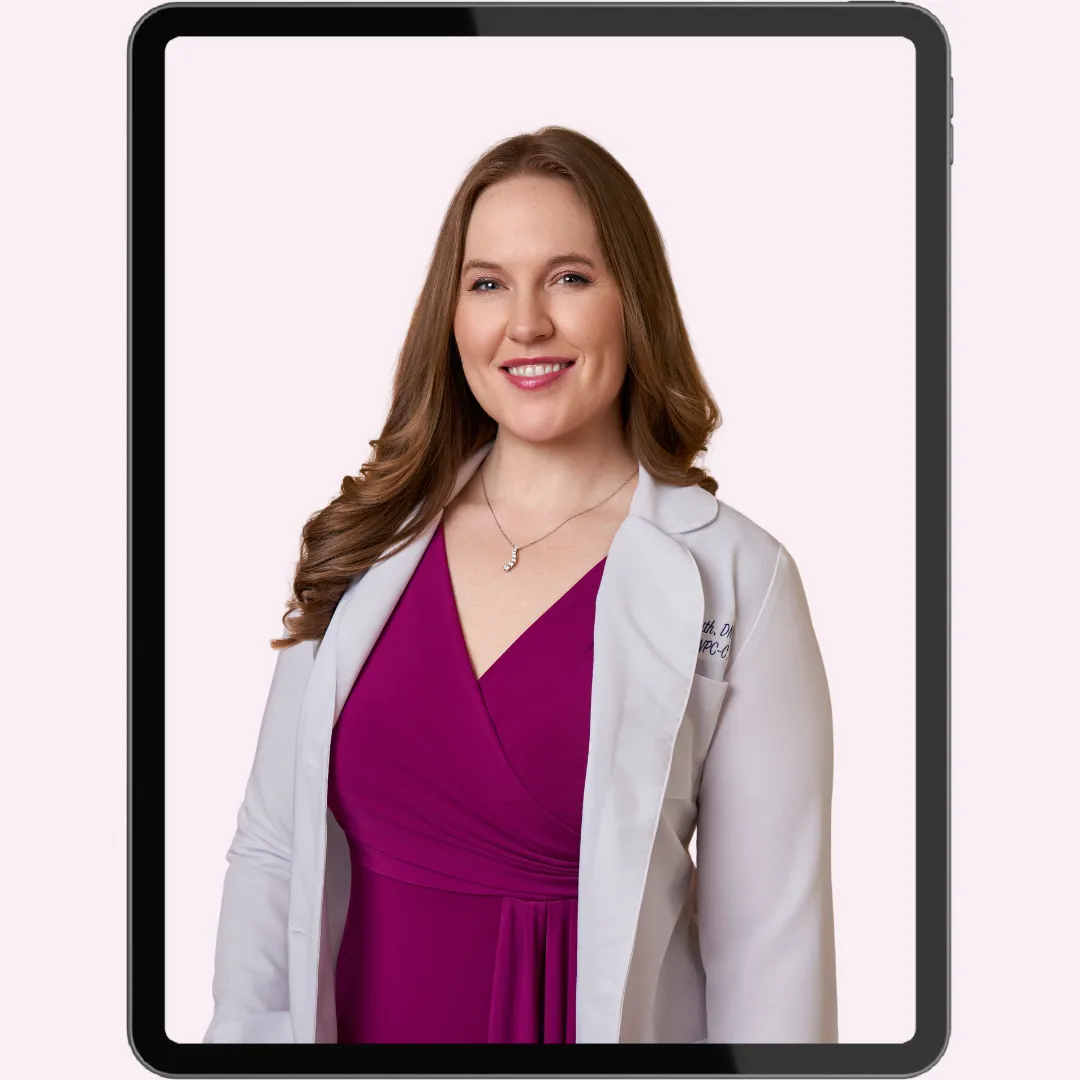
I'm a board-certified Family Nurse Practitioner, Orthopedic Nurse Practitioner Certified (ONP-C), Menopause Society Certified Practitioner (MSCP), Certified Personal Trainer, and founder of Antigravity Wellness, a private hybrid telemedicine practice serving women throughout Washington, Oregon, and Idaho.
I've dedicated my private practice to specializing in the care of perimenopausal and menopausal women who feel like they aren't getting the answers or support they need in standard medicine.
I love to teach. It's the nurse in me.
I teach my patients. I teach through social media. I'm finishing up a book for patients about perimenopause. And increasingly, I've found myself teaching other healthcare providers.
I've had colleagues reach out asking about perimenopause and what to do with the patient who comes in with a laundry list of complaints after watching a TikTok and now thinks she's in perimenopause.
Is she?
Maybe.
Maybe not.
This is the part where I start asking more questions.
I help figure out what could be contributing to her symptoms, what tests might be appropriate, what the results actually mean, and what next steps I would recommend for her care.
Doing this one-on-one is great.
But I want to do more for this patient population that is currently falling into a huge gap in healthcare.
And honestly?
This isn't your fault.
They simply didn't teach us this in school, in training, or at that last big conference you attended.
Or maybe they did—but it was one hour of drinking from a firehose for a single CME credit, and it definitely wasn't enough to help you feel confident caring for these patients on Monday morning.
You're already swamped.
You're already trying to maintain some semblance of work-life balance.
The last thing you want is to feel like you need to go back to school for this.
You don't need another 20-hour lecture series.
You don't need a PhD-level review of reproductive endocrinology.
You need practical, actionable education.
You need confidence.
You need real-world examples.
You need someone to walk through actual cases and explain what they're thinking.
You need someone who can say:
"Here's what matters."
"Here's what doesn't."
"Here's what I'd do."
"Here's when I'd refer."
That's exactly what this course is.
Think Of This As Eight Weeks Of Curbside Consults
Not another boring continuing education course.
Not another conference where you leave inspired but still unsure what to do Monday morning.
Think of this as sitting down with a colleague once a week who has spent years deep-diving into this topic and saying:
"Okay Nicole, help me understand this."
Each week I'll walk you through:
What you're actually seeing in clinic.
What those symptoms may mean.
What diagnoses should be on your radar.
How hormones fit into the bigger picture.
What labs help.
What labs don't.
When treatment is appropriate.
When referral is appropriate.
And how to feel more confident caring for these patients.
All in about 30 minutes per week.
Because you're already busy.
I want this to be accessible and actionable for you and your patients.
By The End Of This Program You
Will Be Able To:
Recognize common and uncommon presentations of perimenopause
Identify symptoms that are frequently misattributed to anxiety, depression, aging, stress, ADHD, or thyroid dysfunction
Understand when symptoms are likely hormone-related and when alternative diagnoses should be considered
Confidently diagnose perimenopause and menopause using current evidence-based approaches
Understand which labs are useful, which are often misleading, and how to interpret them appropriately
Discuss treatment options with confidence
Understand the basics of menopausal hormone therapy (MHT)
Explain risks and benefits clearly to patients
Understand non-hormonal treatment options
Develop an efficient workflow that fits into a busy primary care setting
Know when referral is appropriate
Collaborate more effectively with menopause specialists
Improve outcomes and patient satisfaction
Who This Program Is For
Family Nurse Practitioners
Family Physicians
Physician Assistants
Internal Medicine Providers
Urgent Care Providers
Women's Health Providers
Residents
NP Students
Any healthcare provider caring for women over age 35
No prior menopause training is required.
What Makes This Program Different
The first cohort will be taught live.
You'll have opportunities to ask questions, interact, and learn alongside other providers.
Every session will be recorded.
You'll have lifetime access.
Every future update.
Every future resource.
Every bonus lesson added later.
No annual renewal fees.
No repurchasing updated versions.
No paying again next year.
The earlier you join, the more valuable your enrollment becomes.
Here's My Goal
I'm not trying to turn every provider into a menopause specialist.
I'm trying to help good providers feel more confident caring for women who need them.
Because women deserve better answers.
And providers deserve better education.
If you've been wanting someone to help connect the dots between hormones, symptoms, labs, treatment options, and referral decisions...
I'd love to help.
Join the Founding Cohort of Perimenopause & Menopause Care 101 and let's make these conversations easier—for you and for your patients.
Course Curriculum
Week 1
The Menopause Transition Nobody Taught You
Understanding the stages of reproductive aging, terminology, prevalence, and why so many women are being missed.
Week 2
Recognizing Perimenopause In Real Life
The symptoms patients actually present with in primary care.
Week 3
Diagnosis Made Simple
When to diagnose clinically, when labs help, and when labs create confusion.
Week 4
Hormone Therapy Basics
Understanding estrogen, progesterone, routes of administration, risks, benefits, and patient counseling.
Week 5
Safety, Risks, and Contraindications
Who is an appropriate candidate, who is not, and how to discuss safety confidently.
Week 6
Non-Hormonal Treatment Options
Evidence-based alternatives and supportive therapies.
Week 7
The 15-Minute Menopause Visit
Practical workflows, documentation, and implementation in busy practice settings.
Week 8
When To Refer And How To Collaborate
Knowing your limits, identifying complex cases, and building collaborative relationships with specialists.
Lifetime Access Means Lifetime Access
Most continuing education programs require ongoing fees, renewals, or repurchasing updated content.
That's not how we're doing things.
When you enroll, you receive lifetime access.
Every future update.
Every new resource.
Every improvement.
Every bonus training added to the course.
No additional charge.
The earlier you join, the more valuable your enrollment becomes.
As the program grows, additional resources are added, testimonials accumulate, and CME accreditation pathways are explored, tuition will increase for future cohorts.
Founding members lock in lifetime access forever.
Founding Cohort Enrollment
This inaugural cohort will be intentionally limited in size to encourage meaningful discussion and direct access to Dr. Nicole Smith.
Included In Your Enrollment
✔ 8 Weeks of Live Training
✔ Weekly Learning Modules
✔ Downloadable Clinical Resources
✔ Lifetime Access To Recordings
✔ Future Course Updates
✔ Bonus Resources Added Over Time
✔ Founding Member Status
✔ Priority Access To Future Advanced Trainings
Value
8 Weeks of Live Provider Education — $1,500
Clinical Toolkits & Templates — $750
Hormone Therapy Resource Library — $500
Diagnostic Algorithms & Frameworks — $500
Lifetime Updates & Future Content — $1,000+
Total Value: Over $4,250
Your Investment
Pay In Full - $497
One-time payment
Lifetime access
No renewal fees
No annual subscription
No future charges for updates
Payment Plan - 2 payments of $274
(10% convenience and processing fee included)
Total investment: $548
Immediate access included
Lifetime access included
Want Ongoing Support?
After completing the course you'll have the option to join the Menopause Provider Collaborative.
Because sometimes you don't need another course.
You just need someone to bounce a case off of.
Membership Includes:
✔ One HIPAA-compliant case submission per week.
✔ Personal video review from Dr. Nicole Smith.
✔ Private provider community.
✔ Peer networking and collaboration.
✔ Clinical resources and templates.
✔ Research updates and clinical pearls.
✔ Discounts on future trainings.
Investment: $100 per month.
Month-to-month.
No contracts.
Cancel anytime.
Refundable within 48 hours of enrollment.
Frequently Asked Questions
Is this CME accredited?
Not currently.
We are actively exploring CME accreditation pathways for future versions of the program.
Do I need prior menopause training?
No.
This course was designed specifically for providers seeking a practical foundation.
What if I miss a live session?
Every session is recorded and available for replay.
How long do I have access?
Lifetime.
Is this only for primary care providers?
No.
Any healthcare provider caring for women in midlife can benefit.
Can I ask questions during the course?
Absolutely.
Questions and discussion are encouraged throughout the live training and after the live recordings are completed.
Will I learn how to prescribe hormone therapy?
Yes.
We will cover foundational prescribing principles, safety considerations, patient counseling, contraindications, and when referral is appropriate.
Is the Menopause Provider Collaborative required?
No.
It is an entirely optional membership available after course completion.
What if I have additional questions?
Please email us at [email protected]
We would be happy to help.
The Bottom Line
Women deserve providers who understand perimenopause and menopause.
Providers deserve practical education that fits into real-world clinical practice.
If you've been wanting to feel more confident caring for these patients, this program was built for you.
Join the Founding Cohort and become part of the next generation of menopause-informed healthcare providers.